Aalto Works series inscribed on the UNESCO World Heritage List
Published 27.07.2026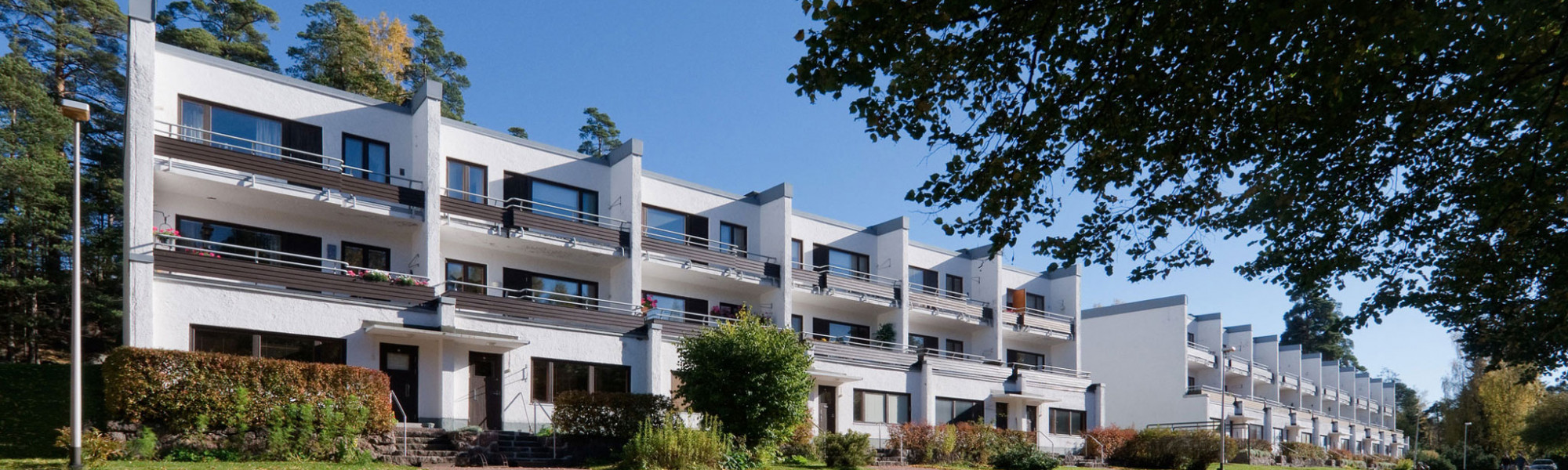
On July 26, 2026, the World Heritage Committee inscribed the “Aalto Works” series—which showcases the modern, humanistic architecture of Alvar, Aino, and Elissa Aalto—on the World Heritage List.
The Aalto Works sites are:
Sunila Pulp Mill Residential area, Kotka
Paimio Sanatorium, 1929–33, Paimio
The Aalto House, Helsinki
Villa Mairea, Pori
Säynätsalo Town Hall, Jyväskylä
University of Jyväskylä, Aalto campus, Jyväskylä
Seinäjoki Civic Centre, Seinäjoki
Muuratsalo Experimental House, Jyväskylä
House of Culture, Helsinki
National Pensions Institute, Helsinki
Studio Aalto, Helsinki
Church of Three Crosses, Imatra
Finlandia Hall, Helsinki
Aalto’s architecture in Sunila is home to many
Sunila’s multifaceted story uniquely combines architecture, the history of the forest industry and working life, Finnish nature, and a residential environment that is still very much alive. The Sunila factory residential area is an essential part of the national and international narrative of the birth of Finland’s welfare society. Visitors to Sunila can experience Aalto’s architecture firsthand and even stay overnight in an original Sunila apartment.
“This is wonderful news for the city of Kotka. The inscription on the World Heritage List is a significant international recognition for Finland and its modern architecture. Interest in Sunila has grown in recent years, and UNESCO’s decision only adds to that interest. Keeping the area vibrant is also key to preserving its architecture, and this provides new opportunities,” says Markku Hannonen, Director of Urban Planning for the City of Kotka.
“For the housing associations and Sunila residents, World Heritage status is a sign that our joint efforts have borne fruit. We in the Pro Sunila Association have been preparing for UNESCO’s decision for quite some time. Now that the decision has finally come, the news hit us like a tidal wave! Fantastic news for Sunila and the entire area! The opportunities that Sunila and the entire area now have are immeasurably valuable!” says Anne Stocker, Chair of the Pro Sunila Association.
“In my opinion, the greatest benefit of UNESCO World Heritage status is the assurance that Sunila will remain a valuable architectural site and a vibrant community. It also strengthens the residents’ commitment to preserving the area. The importance of renovation, including interior work, is emphasized. Sunila has the potential to become an international tourist destination,” Stocker adds.
A World Heritage nomination is a long process
The World Heritage Committee, meeting in Busan, South Korea, approved Finland’s nomination based on an evaluation by ICOMOS. ICOMOS is a global expert organization that promotes the preservation and study of cultural heritage and serves as an advisory body to UNESCO.
Finland signed the UNESCO Convention Concerning the Protection of the World Cultural and Natural Heritage in 1987. The aim of the convention is to identify, protect, and preserve the world’s significant cultural and natural heritage through international cooperation. The UNESCO World Heritage List currently includes more than 1,200 cultural and natural sites. A site may be a single location or a group of sites. Sites may also be located across the territories of several countries.
The Aalto Works series, which highlights modern architecture and the development of the welfare society, was several years in the making. The Finnish Heritage Agency was responsible for compiling the nomination in collaboration with the Alvar Aalto Foundation and the series’ supporting organizations. The Aalto Works series is Finland’s eighth site to be inscribed on the World Heritage List. Since 1991, seven sites in Finland have been inscribed: Old Rauma, Suomenlinna, the Old Church of Petäjävesi, the Verla Groundwood and Board Mill, Sammallahdenmäki, the Struve Geodetic Arc, and the Kvarken Archipelago.
At the heart of every World Heritage site is its outstanding universal value and the attributes that convey it. World Heritage status carries a commitment to preserving these values so they can be passed on to future generations. The defining characteristics of the Aalto Works series include, among other things, its people-centered architecture, which helped shape modern society and the identity of a young nation; its close relationship with nature; and its holistic approach to design, in which architecture, art, design, and science form an integrated whole. The international influence of Aalto’s work on modern architecture and design is also a key part of its significance.
At the Aalto Homes event, you can tour the apartments in Sunila
You can experience the UNESCO site in Sunila firsthand at the Sunila Aalto Homes event on August 29–30. This year’s theme is “Homes on a Human Scale, 1937–1954.” The theme reflects the Aaltos’ philosophy of prioritizing people in housing design, such as proximity to nature, natural light, organic materials, and the scale of spaces. On display are both year-round residences and seasonal homes, as well as the studios of artists and writers. Visitors can also stay overnight in apartments furnished with design classics, which are available for accommodation throughout the year.
For more information about the Sunila Aalto Homes event and to purchase tickets, visit Aaltohomes.fi.